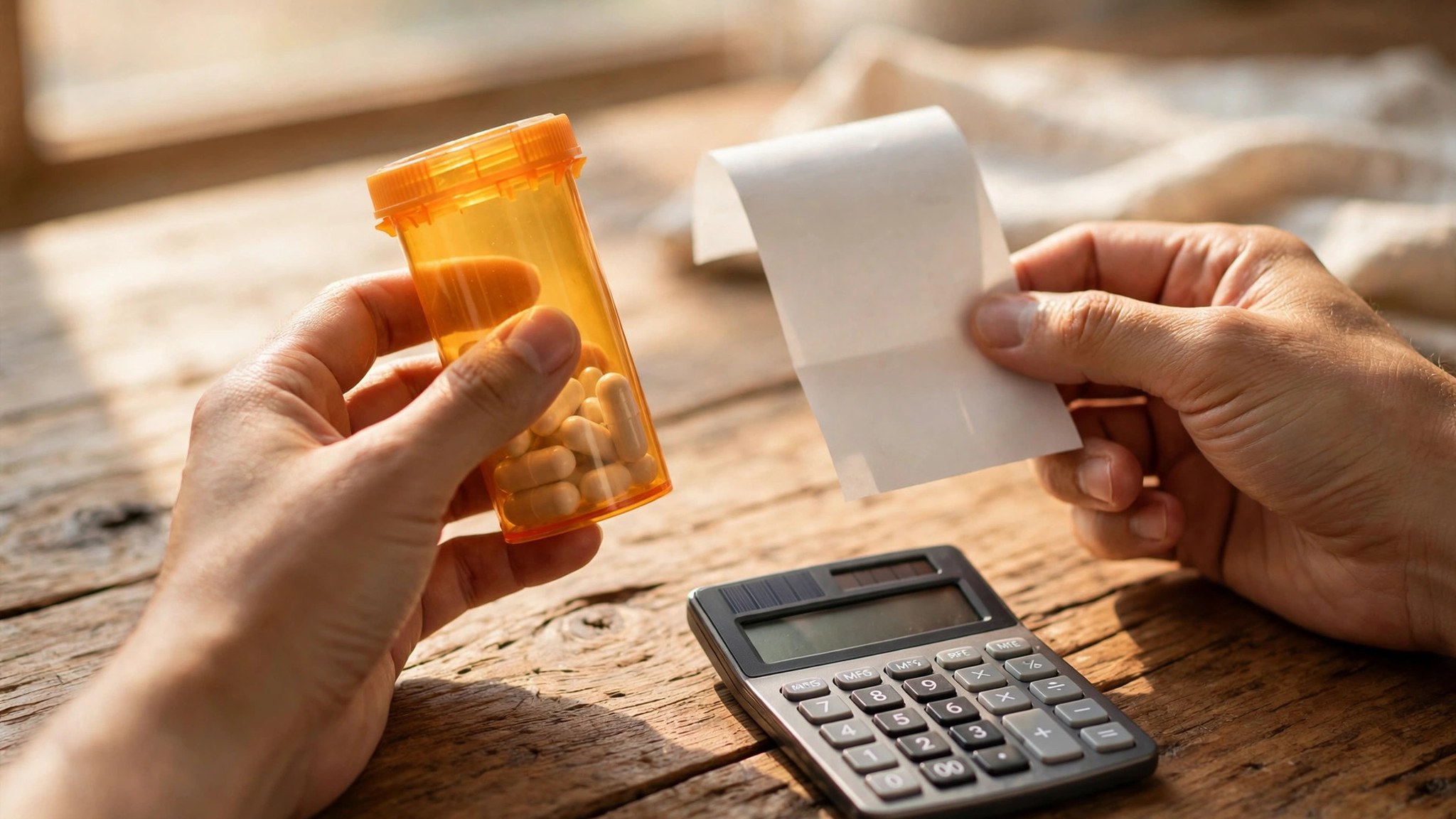
Medicine prices in the United States vary widely, and the price you pay can depend on the pharmacy, the plan, and whether a generic exists. Skipping doses to save money is the most common response, and the worst one. Missed doses can make a treatment fail, bring back symptoms, and lead to a hospital visit that costs far more than the medicine. There are safer ways to cut the cost, and most of them start with a conversation at the pharmacy counter.
Why skipping doses is the wrong saving
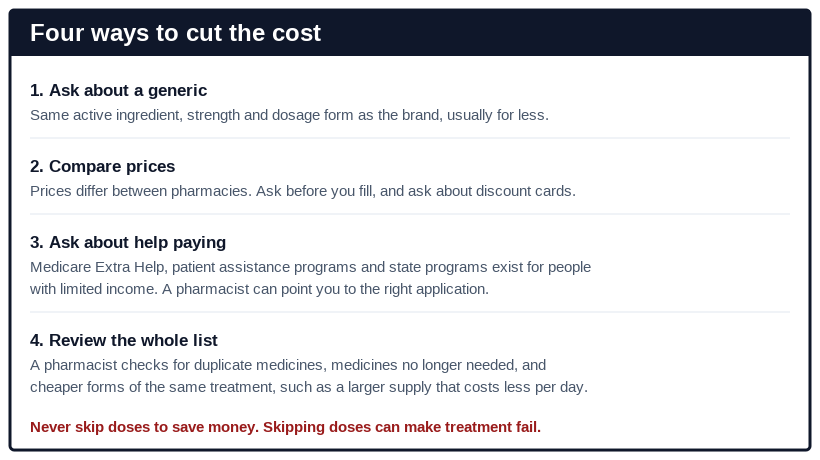
Skipping doses, taking half doses, or stretching a prescription by taking it every other day all change the amount of medicine in your body. For some medicines, that means the treatment stops working. Blood pressure rises again, blood sugar climbs, an infection comes back, or a transplanted organ is put at risk. For others, stopping suddenly can cause withdrawal or a rebound effect. The money saved on the missed doses is small next to the cost of an emergency visit or a hospital stay. If cost is the reason you are missing doses, say so. Pharmacists hear it every day, and they have options that patients do not know about. Never cut back on a prescription without telling your pharmacist or doctor first.
Ask about a generic
A generic medicine has the same active ingredient, strength, dosage form, and route of administration as the brand-name medicine. The FDA requires a generic to work the same way in the body, and to meet the same quality standards. Generics usually cost less because the maker did not pay for the original research and trials. If your prescription is written for a brand name, ask the pharmacist whether a generic is available and whether your prescriber allows a switch. Some medicines have no generic yet, and a few need extra care when switching, such as medicines with a narrow range between an effective dose and a toxic one. Your pharmacist knows which ones those are. The inactive ingredients can differ between a generic and a brand, which matters only if you are allergic to one of them.
Compare prices before you fill
The same medicine can cost a different amount at different pharmacies, sometimes by a wide margin. Prices also change over time. Before you fill a prescription, ask the pharmacist what it will cost with your plan, and what it would cost without it. Discount cards and pharmacy savings programs can lower the price, and some pharmacies offer a lower price for a larger supply. A 90-day supply can sometimes cost less per day than three 30-day fills, but check the math first, because it does not always work out that way. If the price is still too high, ask the pharmacist to contact the prescriber about a cheaper alternative in the same class of medicines. Do not buy prescription medicines from unknown online sellers. A price that looks too good to be true usually means the product is not what it claims to be.
Ask about help paying
Several programs help people with limited income pay for medicines. Medicare Part D Extra Help, also called the Low-Income Subsidy, helps pay Part D premiums, deductibles, and copays for people who qualify, and you can check eligibility on Medicare.gov or by calling Medicare. Many drug makers run patient assistance programs that provide medicines at low or no cost to people who meet their income rules. State pharmaceutical assistance programs exist in some states. Nonprofit foundations help with copays for specific conditions. The application forms take time, and a pharmacist or a hospital social worker can help with them. Ask early, before the prescription runs out, because approvals can take weeks.
Review your plan every year
Drug plans change every year. Formularies change, copays change, and a medicine that was cheap last year can cost more this year. Medicare Part D open enrollment runs from 15 October to 7 December each year, and it is the time to compare plans on Medicare.gov with your actual list of medicines. Enter every medicine, dose, and pharmacy, and the tool shows what each plan would cost you over the year. The cheapest premium is not always the cheapest plan: a plan with a low premium can have high copays for your particular medicines. If you have coverage through an employer or a state program, check its changes too, and ask the pharmacist whether a different pharmacy in your plan's network would charge less. A yearly review takes an hour and can save more than any single discount card.
Review the whole list with your pharmacist
A pharmacist review of everything you take can find savings that no single prescription shows. Two medicines may do the same job, and one can be stopped with the prescriber's agreement. A medicine started for a short-term problem may still be on your list months later. A combination tablet may cost less than its two separate parts. A different strength may work out cheaper per dose. Bring every medicine you take to the review, including over-the-counter products, vitamins, and supplements, and ask the pharmacist to check for duplicates and for anything no longer needed. The review also catches interactions, so it is worth doing even when cost is not the problem.
Frequently asked questions
Try the tools on this site
Muhammad Kashif
Muhammad Kashif runs RxTools Pro. He is not a pharmacist, and this site does not present him as one. He writes these guides from published references, and every factual claim links to its source. The tools and articles on this site are for general information and learning, not personal medical advice.
Sources
- FDA, Generic Drugs
- Medicare, How Much Does Medicare Drug Coverage Cost?
- CMS, National Health Expenditure Data
Related posts
How to Read a Drug Label, Section by Section
Learn the sections of the Drug Facts panel and the full prescribing information, and the five things to check before you take any medicine.
How to Read a Prescription: Sig Codes, Doses and Directions Explained
The parts of a prescription and the sig codes, translated line by line.
What to Do When a Medicine Causes Side Effects
How to tell if a medicine caused a symptom, what to record, and when to get help fast.
What a Drug Interaction Checker Can and Cannot Tell You
What a checker can catch, what it cannot see, and why a clear result is not a safety guarantee.