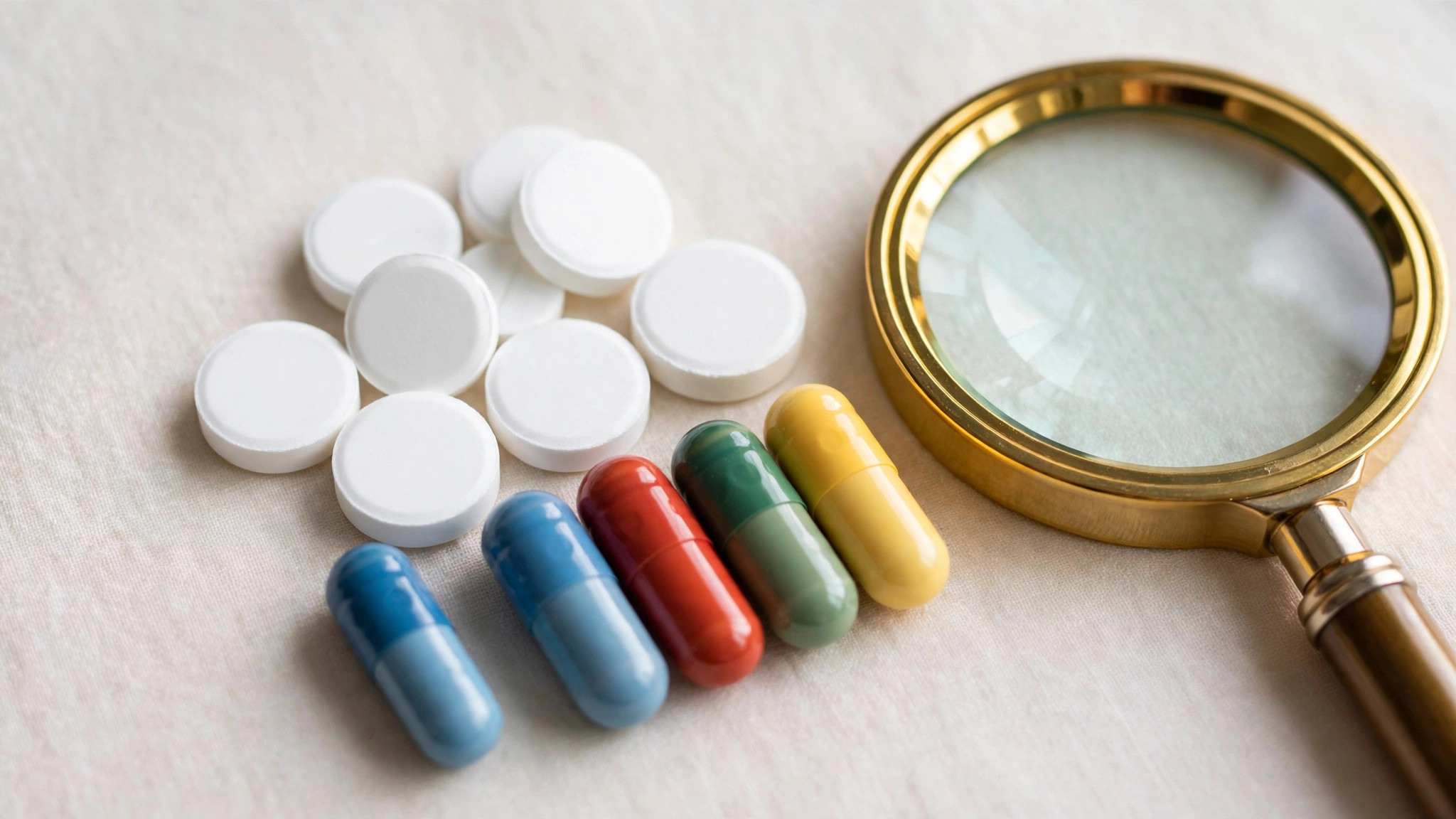
A tablet found loose in a bag, a pill left in a pocket, a capsule with no box. A pill identifier helps you answer what it is by matching its imprint, shape, color, and size against a database. Used carefully, it can tell you what a pill probably is. Used carelessly, it can mislead you. This guide explains how to use it well, and when to stop and ask a pharmacist.
What a pill identifier checks
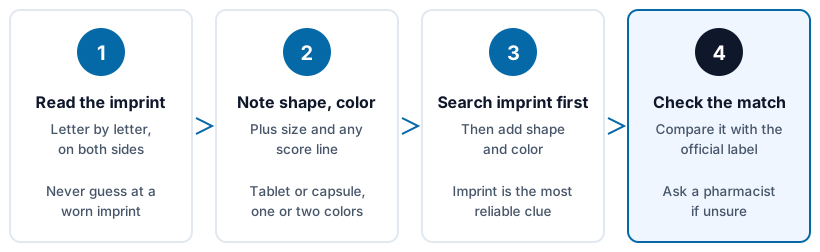
Every manufactured tablet and capsule carries physical features that identify it. The imprint is the letters or numbers stamped into the tablet, or printed on the capsule. The shape, color, size, and scoring (the line across a tablet) add more detail. The imprint is the most reliable of these, because it is specific to one product, while shape and color repeat across many different medicines. Our pill identifier covers 80 common imprints, 315 pills by color and shape, and 125 capsules. Enter the imprint first, then add shape and color to narrow the match.
How to read a pill before you search
Hold the pill under good light and read the imprint exactly, letter by letter and number by number, on both sides. Note the shape, the color, the size, and whether it has a score line. Note whether it is a tablet or a capsule, and whether the capsule has two colors. If the imprint is worn off, partly rubbed away, or unreadable, do not guess at it. A wrong imprint gives a wrong match, and a wrong match is worse than no match. The imprint is also listed in the How Supplied section of the official label, which you can read on DailyMed.
What a match means, and what it does not mean
A match means a product with that imprint, shape, and color exists in the database, and it shows you the name, strength, and form of that product. It does not prove the pill in your hand is that product. The same imprint can appear at different strengths, and two products can share a color and shape. A match is a starting point, not a confirmation. Check the strength on the match against the pill you have, and if more than one product matches, use the markings and size to narrow it down. If the match and the pill disagree on any detail, trust the disagreement, not the match.
When not to trust the result
A pill identifier assumes the pill is a genuine manufactured product. That assumption fails in several common cases. Fake medicines are a real problem: the NHS warns that many websites sell fake medicines, and a fake can copy a real imprint, be out of date, diluted, or not the medicine it claims to be. Pills bought from an unregistered online seller should not be trusted on an identifier match alone. The same applies to pills from another country, pills from a bottle that held more than one medicine, and pills whose imprint has been damaged. In all of these cases, the identifier cannot protect you, because the pill itself may not be what it claims to be.
What to do with a pill you cannot identify
Do not take it. Keep it somewhere safe and away from children, and ask a pharmacist. Bring the pill itself and the bottle or box it came from, because the packaging often answers the question faster than the pill does. If someone has already taken a pill you cannot identify and feels unwell, seek urgent medical care and take the pill and its packaging with you. Do not try to identify a pill by taste or smell, and do not ask someone online to guess from a photo.
How the identifier connects to the label
The official label for each medicine has a How Supplied section that lists the imprint, shape, color, and size of every form and strength. That is the source our identifier is built from, and it is the place to check a match. DailyMed publishes the full labels. Once you know the name, our generic to brand converter can tell you the brand and generic names, and the drug interaction checker can tell you whether it clashes with your other medicines.
Frequently asked questions
Try the tools on this site
Muhammad Kashif
Muhammad Kashif runs RxTools Pro. He is not a pharmacist, and this site does not present him as one. He writes these guides from published references, and every factual claim links to its source. The tools and articles on this site are for general information and learning, not personal medical advice.